


How to Evaluate All-Weather Stage Lights for Long-Term Outdoor Use


Outdoor stage lighting equipment must perform reliably in environments where weather and operating conditions can change significantly. Rain, dust, humidity, temperature fluctuations, transportation, and repeated installation can all affect the long-term performance of lighting fixtures.
For touring productions, outdoor festivals, event production companies, and stage lighting rental businesses, choosing all-weather stage lights involves more than checking whether a fixture has an outdoor protection rating. Housing construction, sealing design, thermal management, mechanical durability, maintenance requirements, and technical support all influence its suitability for repeated outdoor use.
A fixture that performs well during a single outdoor event may not necessarily be the right choice for a rental fleet or a permanent outdoor installation. Buyers need to understand how the equipment will perform throughout its expected service life.
This guide explains how to evaluate outdoor stage lighting equipment, which technical specifications to review, and how to compare products based on long-term operational requirements rather than initial purchase price alone.
1. Define the Environmental Requirements of Your Outdoor Application
The term all-weather stage lights generally refers to lighting fixtures designed for specific outdoor operating conditions. However, it should not be interpreted as a guarantee that a fixture can operate safely in every weather condition.
Different outdoor applications create different environmental challenges. A temporary concert, a touring production, and a permanent outdoor entertainment installation may require very different equipment configurations.
Before selecting outdoor stage lights, identify the actual conditions in which they will operate.
Rain and moisture exposure
Consider whether fixtures may encounter direct rainfall, wind-driven rain, water spray, or moisture accumulation around mounting positions. The installation environment and fixture orientation can influence exposure.
Dust and airborne particles
Open-air festivals, construction sites, and outdoor performance areas may expose equipment to dust, sand, and other airborne contaminants. These particles can affect external surfaces, connectors, and serviceable components.
Temperature fluctuations
Evaluate the expected ambient temperature during both daytime and nighttime operation. High temperatures may increase thermal stress, while significant temperature changes can create additional challenges during transportation and storage.
Humidity and condensation
Equipment moving between different climates or storage environments may encounter condensation. Moisture-related risks are not limited to direct rainfall.
Corrosive environments
Coastal locations and industrial environments may expose fixtures to salt or airborne pollutants. These conditions make material selection, surface protection, and maintenance particularly important.
Operating duration
Determine whether the equipment will be used for occasional outdoor events, multi-day festivals, touring schedules, or extended outdoor installations.
2. Verify IP Ratings and Environmental Protection Documentation
Ingress Protection (IP) ratings are among the first specifications buyers should review when evaluating waterproof stage lighting.
An IP rating indicates the level of protection against solid objects and water ingress under specified test conditions. However, it does not independently establish resistance to every environmental factor that may affect long-term outdoor performance.
For example, an IP rating does not automatically confirm resistance to:
Long-term ultraviolet exposure.
Corrosion caused by salt or industrial pollutants.
Repeated temperature cycling.
Mechanical impact during transportation.
Every possible installation or operating condition.
When reviewing an outdoor stage light, request and verify the following information:
Evaluation Item |
What Buyers Should Confirm |
|---|---|
IP rating |
Documented protection rating of the complete fixture |
Test conditions |
Whether the rating applies to the assembled product |
Connection points |
Protection requirements for power and signal connections |
Installation orientation |
Any restrictions on mounting position or fixture orientation |
Temperature range |
Specified operating and storage temperatures |
Maintenance |
Inspection, cleaning, and sealing recommendations |
Supporting documents |
Available test reports and technical specifications |
The complete lighting system also needs to be considered. Power cables, signal connectors, distribution equipment, mounting hardware, and external accessories must all be appropriate for the installation environment.
A high IP rating can be an important selection criterion, but it should not replace a complete technical evaluation.
3. Examine Housing Materials, Sealing Design, and Construction Quality
The housing protects a fixture's internal electronics, optical components, and mechanical systems from external conditions. Its durability depends on material selection, structural design, manufacturing quality, and the intended application.
For buyers evaluating professional outdoor stage lighting equipment, several construction details deserve particular attention.
Housing Materials and Surface Protection
The fixture housing should be suitable for the expected environmental exposure and handling requirements.
Ask the manufacturer about:
Main housing materials.
Surface treatment and coating specifications.
Corrosion-related material information, where applicable.
Mechanical protection of exposed components.
Recommended cleaning and maintenance procedures.
A metal housing or protective coating should not automatically be assumed to provide long-term corrosion resistance in every environment. Buyers should review the actual material specifications and environmental limitations.
Seals, Covers, and Connection Interfaces
Sealing components are essential to maintaining the intended protection of an outdoor lighting fixture.
Pay attention to:
Housing joints and sealing interfaces.
Protective covers and access panels.
Power and signal cable entries.
Connector protection.
Replaceable sealing components.
Damaged seals, incorrect assembly, or unauthorized modifications may compromise the fixture's environmental protection.
Maintenance teams should understand which components can be inspected or replaced during routine service and which repairs require qualified technicians or authorized support.
Mounting and Mechanical Components
Outdoor stage lights may be installed on trusses, ground supports, temporary structures, or permanent mounting systems.
The mounting brackets, fasteners, safety attachment points, and mechanical interfaces should be appropriate for the intended installation.
For rental companies and touring productions, regular mechanical inspection is particularly important because repeated transportation and installation can introduce damage that is unrelated to weather exposure.
4. Evaluate Thermal Management and Operating Temperature
Thermal management is an important factor in the long-term performance of professional stage lighting equipment.
Outdoor operation does not always mean lower operating temperatures. Direct sunlight, high ambient temperatures, restricted ventilation, and enclosed installation positions can all increase thermal stress.
For this reason, buyers should not assume that an outdoor-rated enclosure automatically guarantees suitable thermal performance under every operating condition.
Before purchasing, review the manufacturer's specified operating temperature range and installation requirements.
Important questions include:
What is the specified operating temperature range?
Are there ventilation or mounting-orientation requirements?
Are there operating limitations under high ambient temperatures?
What maintenance is recommended for cooling components?
What procedures should be followed if a fixture shows abnormal temperature-related behavior?
For touring and rental applications, cooling components and ventilation paths should be included in routine inspections.
Dust accumulation, damaged components, or blocked ventilation may affect the fixture's ability to manage heat. Cleaning and servicing should always follow the manufacturer's instructions.
When comparing outdoor LED stage lights, buyers should consider thermal performance alongside light output, optical performance, and environmental protection.
5. Assess Transportation and Repeated Installation Requirements
For stage lighting rental companies and touring production teams, transportation durability can be just as important as weather resistance.
Outdoor fixtures are frequently moved between venues, loaded into transport vehicles, stored in cases, mounted on trusses, removed after performances, and prepared for the next event.
Repeated handling creates practical reliability concerns that should be considered before purchasing.
Evaluate the following factors:
Factor |
Evaluation Focus |
|---|---|
Fixture dimensions |
Compatibility with existing transport cases and storage systems |
Fixture weight |
Handling requirements and installation efficiency |
Optical protection |
Protection of lenses and exposed optical components |
Mechanical protection |
Security of moving components during transportation |
Mounting design |
Ease of installation and removal |
Connector protection |
Protection of power and signal interfaces |
Serviceability |
Ease of inspection and replacement of serviceable components |
A fixture designed primarily for a fixed installation may not be the most convenient option for a rental business that transports equipment frequently.
Similarly, touring productions may prioritize consistent configuration, efficient setup, and straightforward maintenance across different venues.
Buyers should evaluate the complete equipment workflow, from transportation and storage to installation, operation, dismantling, and post-event inspection.
6. Consider Humidity, Condensation, and Corrosion Risks
Moisture-related problems are not limited to rainfall. Humidity changes, condensation, salt exposure, and airborne pollutants can also affect outdoor stage lighting equipment.
These risks vary according to the installation location, storage environment, operating schedule, and fixture construction.
Humidity and Condensation
Condensation may occur when equipment moves between environments with different temperatures and humidity levels.
For example, a fixture transported from a cool storage area into a warm, humid environment may experience condensation depending on the conditions.
Follow the manufacturer's instructions for acclimatization, inspection, and storage. Do not energize equipment if moisture conditions make operation unsafe.
Corrosion in Coastal and Industrial Environments
Coastal venues may expose equipment to salt-containing air, while industrial environments may contain other airborne pollutants.
For these applications, buyers should ask whether the manufacturer can provide additional information about material selection, surface protection, and environmental maintenance.
Routine Environmental Inspection
Maintenance teams should check visible surfaces and interfaces for signs of deterioration, including:
Corrosion on exposed metal components.
Damage to protective coatings.
Deterioration around housing joints.
Discoloration or damage to connectors.
Moisture accumulation or unusual residue.
Cleaning, drying, and repair procedures should follow the manufacturer's recommendations.
An outdoor protection rating should not be interpreted as a guarantee of immunity to condensation or corrosion.
7. Match Outdoor Stage Lights to the Intended Application
Long-term reliability is only one part of the selection process. The fixture must also deliver the lighting performance required by the production.
Different outdoor applications require different combinations of brightness, beam distribution, color control, movement, and visual effects.
Outdoor Concerts and Music Festivals
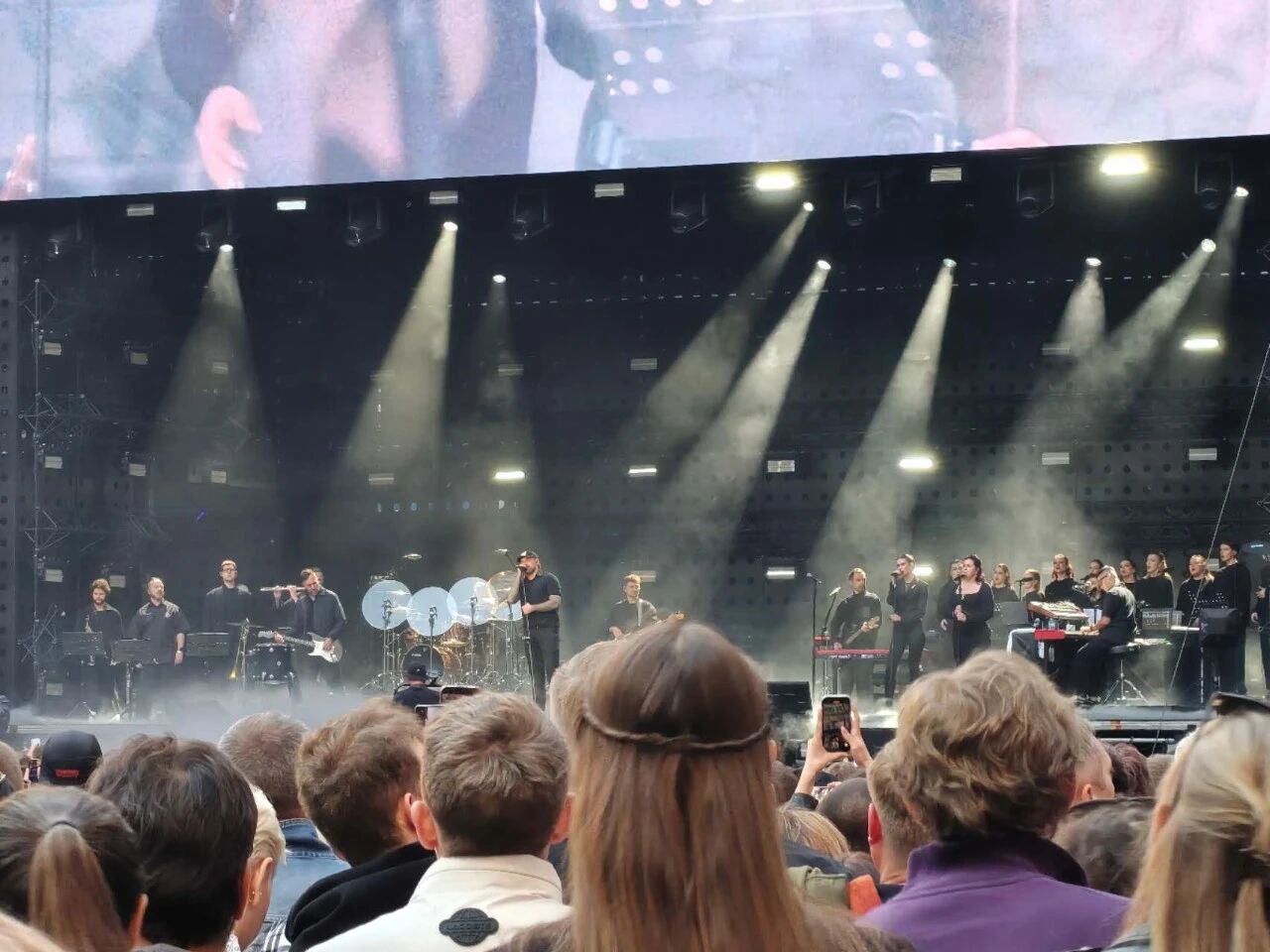
Outdoor concerts and festivals often require a combination of wide stage coverage, performer highlighting, dynamic beam effects, and audience-facing visual elements.
Fixture selection should account for:
Stage dimensions and performance areas.
Truss height and mounting positions.
Audience distance.
Required beam coverage.
Environmental exposure.
Production style and control requirements.
A combination of moving head, wash, and effect fixtures may be appropriate depending on the visual design.
For projects requiring professional moving head equipment, buyers can review the FINE ART LED Moving Head Lights product range and compare individual models against their production requirements.
Touring Productions
Touring teams often prioritize equipment consistency, transport protection, efficient installation, and reliable control behavior.
Fixtures should integrate with the planned lighting console and control workflow. Buyers should confirm the actual DMX modes, channel requirements, movement functions, and optical specifications of each model before finalizing the equipment list.
Outdoor Cultural and Public Events
Cultural performances, tourism events, and temporary public programs may involve different stage layouts, installation periods, and environmental conditions.
The lighting system should be designed around the venue, performance schedule, installation arrangement, and required coverage.
Permanent Outdoor Entertainment Installations
Permanent installations may require greater attention to service access, documented environmental limits, spare-parts availability, and scheduled maintenance.
Buyers should distinguish between fixtures intended for temporary outdoor events and products specifically suitable for the environmental conditions and operating schedules of permanent installations.

8. Confirm Control Compatibility and Operational Consistency
A fixture may be physically suitable for outdoor operation but still create difficulties if it does not integrate properly with the production's lighting control system.
Before purchasing, confirm:
Supported control protocols.
DMX operating modes.
Channel requirements.
Console compatibility.
Configuration and addressing procedures.
Firmware or configuration requirements, where applicable.
For systems using multiple fixtures, operational consistency is also important.
Buyers should evaluate whether the fixtures provide predictable behavior in areas such as movement, dimming, color output, and supported effects. These characteristics influence how easily operators can reproduce lighting cues across different venues.
For technical teams, maintaining accurate fixture documentation can simplify installation and troubleshooting.
FINE ART provides DMX charts and technical documentation to help users review relevant fixture control information.
For larger equipment inventories, a centralized stage lighting fixture library can also support fixture preparation and control-system workflows.
Do not assume that fixtures with similar appearances or product names have identical control behavior. Always check the specifications of the exact model being purchased.
9. Establish a Preventive Maintenance Program
Long-term outdoor operation requires a maintenance program based on manufacturer recommendations, actual operating conditions, and equipment usage history.
For rental businesses and production companies, maintenance should be part of the equipment lifecycle rather than something performed only after a fault occurs.
A practical inspection process can include three stages.
Before Deployment
Inspect fixtures before they leave the warehouse or storage facility.
Check:
Housing, seals, covers, and cable entries.
Power and signal connectors.
Lenses and optical components.
Mounting brackets and safety attachment points.
Cooling and ventilation components.
Pan and tilt movement, where applicable.
Visible damage or signs of moisture.
After Outdoor Operation
After an outdoor event, inspect equipment for visible environmental or mechanical damage.
Pay particular attention to dust accumulation, moisture exposure, connector condition, impact marks, and abnormal operating behavior.
Periodic Maintenance
Scheduled maintenance should follow the manufacturer's recommended procedures and take actual usage frequency into account.
Keep records of:
Fixture model and identification.
Inspection date.
Operating history, where available.
Reported faults.
Maintenance work performed.
Replacement components.
Follow-up actions.
Accurate records help rental businesses identify recurring problems and make better-informed decisions about repair, replacement, and equipment allocation.
Unapproved disassembly, sealing modifications, or repairs may affect environmental protection and warranty coverage. Maintenance should be carried out according to approved procedures.
10. Compare Warranty, Spare Parts, and Technical Support
Supplier support can have a significant influence on the practical value of outdoor stage lighting equipment.
For companies operating rental fleets or supporting frequent events, equipment downtime can affect schedules, labor arrangements, and production continuity.
Before placing an order, ask the supplier about the following:
Warranty coverage
Confirm the warranty period, covered components, exclusions, and conditions that may affect coverage. Check whether the intended application is included.
Repair procedures
Understand how technical problems are reported, diagnosed, and handled. Ask whether repairs can be completed locally or require equipment to be returned.
Spare-parts availability
Check the availability of relevant replacement components and whether compatible parts can be supplied for the purchased models.
Technical documentation
Confirm whether the supplier provides product manuals, DMX information, troubleshooting guidance, and maintenance instructions.
Technical assistance
Ask what technical support is available during installation, operation, and maintenance.
A longer warranty period does not automatically mean better support. Buyers should evaluate the complete service arrangement, including repair processes and spare-parts availability.
11. Calculate the Total Cost of Ownership
The initial purchase price is only one part of the cost of operating all-weather stage lights over time.
For rental companies, touring teams, and event production businesses, the total cost of ownership may include acquisition, transportation, storage, installation labor, inspection, maintenance, repairs, downtime, and eventual replacement.
A useful comparison should consider:
Cost Factor |
What to Evaluate |
|---|---|
Purchase price |
Initial investment per fixture |
Transportation |
Case requirements, handling, and shipping |
Installation |
Labor and setup time |
Maintenance |
Inspection frequency and servicing requirements |
Spare parts |
Availability and replacement costs |
Repair |
Service costs and turnaround time |
Downtime |
Potential impact on scheduled productions |
Compatibility |
Integration with existing lighting systems |
Replacement |
Expected equipment lifecycle and future upgrade needs |
A higher purchase price does not automatically mean better long-term value. Similarly, a lower-priced fixture is not necessarily a more economical choice.
The key is to compare documented product capabilities, expected maintenance requirements, support arrangements, and realistic operating costs.
For businesses using outdoor lighting equipment frequently, a structured inspection and maintenance process can also improve cost planning by making repair needs and replacement decisions easier to track.
Using a consistent evaluation process makes it easier to compare different outdoor stage lighting products and identify equipment that fits the actual operating environment.
Frequently Asked Questions
1. What are all-weather stage lights?
All-weather stage lights generally refer to lighting fixtures designed for specified outdoor operating conditions. Their suitability depends on the documented protection rating, construction, operating temperature range, installation requirements, and maintenance procedures.
The term does not guarantee that a fixture can operate in every possible weather condition.
2. What should buyers look for in weather-resistant stage lighting?
Buyers should evaluate the IP rating, housing materials, sealing design, connection interfaces, temperature limits, thermal management, mounting requirements, control compatibility, and maintenance needs.
The appropriate specifications depend on the intended venue, environmental exposure, and operating schedule.
3. Does an outdoor IP rating guarantee long-term reliability?
No. An IP rating describes protection against solid and water ingress under specified test conditions. It does not independently guarantee resistance to corrosion, ultraviolet exposure, repeated temperature changes, transportation damage, or every other environmental stress.
Long-term reliability also depends on product construction, installation, maintenance, and operating conditions.
4. How can rental companies extend the service life of outdoor stage lights?
Rental companies should follow the manufacturer's maintenance instructions, inspect fixtures before and after deployment, use suitable transportation and storage practices, and maintain accurate service records.
Damage should be addressed before equipment is assigned to another event. Fixtures should also be checked against their documented operating limits before each new application.
5. Are all-weather stage lights suitable for permanent outdoor installations?
Not necessarily. A fixture designed for temporary outdoor events may not be appropriate for continuous operation in a permanent installation.
Buyers should confirm the manufacturer's intended use, operating limits, environmental suitability, service requirements, and maintenance recommendations.
6. Why is supplier support important for outdoor stage lighting?
Supplier support helps buyers obtain technical documentation, troubleshoot problems, source replacement parts, and understand maintenance requirements.
For companies managing frequent events or large equipment inventories, repair turnaround and spare-parts availability can directly affect operating continuity and equipment costs.
7. What is the difference between waterproof stage lights and all-weather stage lights?
The terms are sometimes used interchangeably in product marketing, but they do not necessarily describe the same range of environmental capabilities.
Waterproof stage lights generally emphasize protection against water ingress under specified conditions. All-weather stage lights may be marketed for broader outdoor use, but buyers still need to verify the actual IP rating, temperature limits, material specifications, and environmental restrictions of each model.
Conclusion
Evaluating all-weather stage lights for long-term outdoor use requires more than checking an IP rating or choosing a product labeled for outdoor applications.
Buyers should assess the complete fixture design, environmental protection, housing construction, thermal performance, transportation requirements, control compatibility, maintenance procedures, and supplier support.
For outdoor festivals, touring productions, rental companies, and permanent entertainment installations, the selection process should begin with the actual operating environment and the expected equipment lifecycle.
A structured evaluation helps production teams compare products more accurately, reduce avoidable maintenance issues, and make equipment investment decisions based on practical operating requirements.
About FINE ART
FINE ART is a professional stage lighting brand of Guangzhou CAIYI Technology Co., Ltd. The company has been engaged in stage lighting technology and manufacturing since 2002, serving professional entertainment, performance, and event applications.
With its manufacturing capabilities and professional stage lighting product portfolio, FINE ART provides lighting equipment options for different production and project requirements.
To learn more about the company's products and capabilities, visit the FINE ART official website or contact the team to discuss your stage lighting project.


