


Theater Profile Moving Head Lights: Applications in Opera and Stage Productions


Lighting plays an essential role in theater and opera productions. It helps audiences focus on performers, understand the atmosphere of each scene, and follow the visual development of a story. Unlike concert lighting, which often emphasizes dynamic beams and large-scale visual effects, theatrical lighting requires a high level of precision, consistency, and control.
A theater profile moving head light combines the positioning flexibility of a moving head fixture with the controlled beam shaping associated with profile lighting. It can help lighting designers illuminate specific performers or stage areas, create defined lighting shapes, and adapt to changing stage arrangements.
For opera houses, drama theaters, touring productions, and multipurpose performance venues, these fixtures can support more flexible lighting designs while reducing the need to rely entirely on fixed lighting positions.
This guide explains the key applications, selection considerations, and system integration factors involved in using profile moving head lights for professional stage productions.

1. What Is a Theater Profile Moving Head Light?
A theater profile moving head light is a moving lighting fixture designed to provide controlled illumination with adjustable positioning and beam shaping capabilities.
Traditional profile fixtures are commonly installed in fixed positions, such as front-of-house bridges, side lighting positions, or overhead lighting bars. A moving-head profile fixture adds pan and tilt movement, allowing the lighting operator to reposition the beam during rehearsals or live performances.
Depending on the fixture design, relevant optical functions may include:
Framing shutters: Shape the illuminated area and help control spill light outside the target area.
Gobo projection: Project patterns, textures, or defined shapes onto stage surfaces.
Iris control: Adjust the beam diameter where this function is available.
Focus and zoom: Adjust projection sharpness and beam size within the fixture's optical range.
Color control: Change the color of the illuminated area to support different scenes and moods.
Pan and tilt movement: Reposition the fixture to follow performers or illuminate different stage zones.
Not every profile moving head includes all these functions. Lighting designers should review the actual optical configuration and technical specifications of each model before selecting equipment.
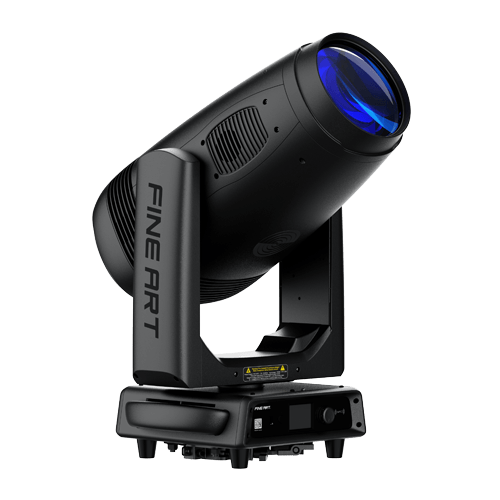
For projects requiring a combination of framing, color, and flexible positioning, FINE ART's FA 17C professional framing moving head light is one product worth evaluating. Its published product information identifies it as a multi-spectrum framing moving head with a 1600W six-color LED module. Confirm the detailed optical functions and suitability against the current product specification before finalizing a lighting design.
2. Key Applications in Opera and Theater Productions
2.1 Highlighting Solo Performers and Main Characters
In opera and drama productions, the audience needs to identify the main performer even when multiple actors are present on stage.
Profile lighting can create a more controlled illuminated area around a singer, actor, or featured performer. By adjusting the fixture's position and beam shape, lighting designers can emphasize a character without unnecessarily illuminating the surrounding scenery.
Typical applications include:
Highlighting an opera singer during a solo performance.
Separating a lead actor from a group scene.
Creating a focused visual area during a monologue.
Maintaining performer visibility when stage backgrounds are dark or visually complex.
The lighting design should account for performer movement, sightlines, stage depth, and the angle of incidence. A beam that is too narrow may restrict movement, while excessive spill can weaken the visual separation between the performer and the background.
2.2 Creating Defined Lighting Areas on Stage
Theater productions often use several performance zones. Actors may move between the center stage, side areas, platforms, staircases, and secondary performance spaces.
Profile fixtures with framing capabilities can help designers define these areas more accurately. By shaping the beam, the lighting team can illuminate a specific section of the stage while limiting unwanted light on nearby scenery or other performers.
This is especially useful for:
Multi-level stage designs.
Theater productions with several simultaneous performance areas.
Scenes using projected scenery or LED backgrounds.
Performances that require clear separation between foreground and background.
When planning these zones, designers should consider fixture throw distance, beam angle, mounting position, and the size of the target area. A practical lighting plot should also allow enough overlap between adjacent zones to avoid visible gaps when performers move.
2.3 Supporting Scene Transitions and Changing Stage Positions
Opera and theatrical productions frequently transition between different locations, time periods, and dramatic moods. Lighting cues help communicate these changes to the audience.
Moving-head profile fixtures can be repositioned through programmed cues, allowing the lighting team to change the illuminated area as performers move or the stage arrangement changes.
For example:
A narrow lighting area can emphasize a solo performer.
A wider framed area can support a group scene.
A shifted beam can follow a performer moving across the stage.
A change in color and intensity can help establish a different atmosphere.
The effectiveness of these transitions depends on cue timing, movement speed, fixture positioning, and coordination with the lighting console. Designers should test transitions during technical rehearsals to ensure that movement is smooth and does not distract from the performance.
2.4 Enhancing Scenic Details and Stage Architecture
In addition to illuminating performers, profile moving head lights can support the visual presentation of stage scenery and architectural elements.
When equipped with suitable framing and projection optics, they may be used to highlight:
Stage entrances and architectural structures.
Decorative elements and scenic details.
Selected sections of curtains or backdrops.
Specific floor areas and stage platforms.
Gobo patterns used as part of the visual composition.
For productions with elaborate scenic designs, controlling light spill is particularly important. Unwanted illumination can reduce contrast, flatten the visual depth of a set, or interfere with projection and video content.
Lighting designers should coordinate fixture positions with scenic designers and video teams before installation. This helps prevent lighting beams from conflicting with projection surfaces or important visual elements.
3. Important Features to Evaluate When Selecting a Moving Head Profile Light
Not every moving head fixture is suitable for theatrical applications. The selection process should focus on optical performance, control precision, installation conditions, and operational requirements.
3.1 Framing Accuracy and Beam Control
For theater applications, the ability to control the illuminated area is often more important than simply producing a powerful beam.
When evaluating framing performance, consider:
Whether the fixture has a framing shutter system.
How accurately the beam edges can be shaped.
Whether the framing system can create the required geometric shapes.
How consistently the fixture maintains its framing during movement.
Whether the optical system can meet the project's required projection distance.
The framing system should be tested under realistic stage conditions. A fixture that performs well in a showroom may produce different results when installed at a long throw distance or at an angled position.
3.2 Optical Quality, Focus and Projection
The optical system influences the clarity and consistency of the illuminated area.
For productions involving detailed scenery, patterned projections, or precise performer highlighting, evaluate:
Focus adjustment range.
Edge definition and projection uniformity.
Zoom range, if available.
Light output at the intended working distance.
Color consistency across the illuminated area.
Lighting designers should compare the fixture's performance at the actual installation distance rather than relying only on headline brightness figures.
3.3 Color Quality and Dimming Performance
Opera and theater productions use color to communicate mood, time, location, and dramatic tension.
A suitable fixture should provide the color range and dimming behavior required by the lighting design. When comparing models, review the available color system, dimming curves, low-intensity performance, and consistency between fixtures.
For productions involving subtle fades and transitions, test dimming behavior at low output levels. Smooth transitions can be particularly important during quiet dramatic moments, where sudden changes in brightness may distract the audience.
3.4 Movement Precision and Noise Considerations
Moving-head fixtures are often repositioned through programmed cues. Smooth movement and repeatable positioning can therefore influence the quality of a theatrical lighting design.
For quieter performance environments, mechanical noise should also be considered. Opera houses, drama theaters, and acoustic performance venues may have different noise requirements from concert halls or outdoor events.
During product evaluation, check:
Pan and tilt movement smoothness.
Position repeatability.
Movement speed and control options.
Noise levels during operation.
Fixture behavior during slow, subtle movement cues.
Where possible, conduct an on-site test under actual venue conditions.
3.5 Maintenance and Long-Term Operation
Theaters often operate on fixed production schedules. Equipment downtime can affect rehearsals, performances, and technical preparation.
Before purchasing, evaluate the accessibility of service components, availability of replacement parts, maintenance documentation, and the supplier's technical support process.
A clear maintenance plan can help venue operators manage equipment over a longer service life.
4. Integrating Profile Moving Head Lights into a Theater Lighting System
A profile moving head should be evaluated as part of the complete lighting system rather than as an isolated fixture.
4.1 Lighting Position and Fixture Layout
The mounting position determines the angle, coverage, and practical framing range of a fixture.
Common positions include:
Front-of-house bridges for performer highlighting.
Overhead lighting bars for general stage coverage.
Side positions for modeling and visual separation.
Rear positions for backlighting and scenic effects.
The final layout should be based on the venue's stage dimensions, ceiling height, audience sightlines, and production requirements.
4.2 DMX Control and Fixture Data
Professional theater systems commonly use lighting consoles to control fixture parameters and coordinate lighting cues.
Before installation, confirm the fixture's DMX channel modes, control parameters, addressing requirements, and compatibility with the venue's console workflow.
Lighting designers and programmers can use the FINE ART Stage Lighting Fixture Library to check available fixture data for supported control platforms. The actual library file and fixture mode should always be matched to the specific model and software version being used.
For more complex systems, the lighting team should also plan signal distribution, network infrastructure, backup procedures, and equipment addressing before technical rehearsals.
4.3 Programming and Technical Rehearsals
A well-designed fixture layout still requires careful programming.
During technical rehearsals, the team should check:
Whether each fixture can reach its assigned stage area.
Whether framing positions remain accurate throughout movement.
Whether lighting cues transition at the intended speed.
Whether color and intensity changes match the production's visual requirements.
Whether the lighting beams interfere with projections, screens, or scenic elements.
Cue programming should be tested with performers in their actual positions. This is particularly important for opera and drama productions where blocking and stage movement are closely linked to the lighting design.
5. Common Mistakes When Using Profile Moving Head Lights
Several issues can reduce the effectiveness of profile moving head lights in theater environments.
Choosing fixtures based only on brightness
High output does not automatically mean better theatrical performance. Framing accuracy, optical quality, dimming behavior, and color consistency should also be considered.
Ignoring the actual throw distance
The same fixture may perform differently depending on its mounting position and distance from the stage. Always evaluate beam size, focus, and output at the intended installation distance.
Overlooking performer movement
A tightly framed area may look effective in a static test but fail when actors move. Lighting cues should be checked against the actual blocking and choreography.
Failing to check control compatibility
Incorrect fixture profiles or channel modes can lead to unexpected behavior during programming. Confirm fixture data before the production enters technical rehearsals.
Not planning maintenance access
Fixtures installed at high positions may require specialized access equipment. Consider maintenance access and service procedures during the initial system design.
6. How to Evaluate Profile Moving Head Lights for Theater Projects
For theater operators, consultants, and procurement teams, a structured evaluation process can help reduce purchasing risks.
Evaluation area |
What to check |
|---|---|
Optical performance |
Focus, projection quality, beam uniformity and usable output |
Framing system |
Shutter configuration, edge definition and framing flexibility |
Color and dimming |
Color range, consistency and smooth low-level dimming |
Movement |
Pan/tilt precision, repeatability and operating noise |
Control |
DMX modes, fixture library availability and console compatibility |
Installation |
Mounting options, weight, dimensions and venue requirements |
Maintenance |
Service access, documentation, spare parts and technical support |
Before placing a bulk order, request the latest technical documentation and arrange a product demonstration where possible. A practical test using the venue's lighting positions, control system, and representative stage scenes can provide more useful information than comparing specifications alone.
For a broader overview of available fixture categories, visit FINE ART's professional moving head light product range. The product range should be reviewed alongside the specific optical requirements of the theater project.
7. Why Work with an Experienced Stage Lighting Manufacturer?
Theater lighting projects often require more than individual fixtures. Product selection needs to account for the venue's technical conditions, lighting design, control system, installation requirements, and long-term operation.
An experienced manufacturer can support project teams by providing product specifications, fixture data, technical documentation, and application-related assistance.
FINE ART, a professional stage lighting brand under Guangzhou CAIYI Technology Co., Ltd., develops and manufactures moving head lights, effect lights, and lighting control systems for theaters, concerts, TV productions, and other professional applications. The company reports nearly 500 employees and a factory area of around 60,000㎡.
For theater projects, buyers should communicate their stage dimensions, fixture positions, control platform, performance requirements, and expected operating conditions when requesting product recommendations.
Conclusion
Theater profile moving head lights provide lighting designers with a flexible way to combine precise beam shaping and programmable movement. In opera houses and professional theaters, they can support performer highlighting, defined stage zones, scenic illumination, and transitions between scenes.
Successful selection depends on more than brightness. Framing performance, optical quality, color and dimming behavior, movement precision, control compatibility, and maintenance requirements should all be evaluated in the context of the venue.
By matching fixture capabilities to the production's visual and technical requirements, theater operators and lighting designers can build a more adaptable and reliable lighting system.
Frequently Asked Questions
1. What is a theater profile moving head light?
A theater profile moving head light is a moving fixture designed to provide controlled illumination and, depending on its optical configuration, beam shaping or framing capabilities. It combines flexible positioning with the precision needed for theatrical applications.
2. How are profile moving head lights used in opera productions?
They can be used to highlight solo performers, define illuminated stage areas, support scene transitions, and emphasize selected scenic details. Their actual applications depend on the fixture's optical functions and the venue's lighting design.
3. What is the difference between a profile moving head and a standard moving head light?
A profile moving head is selected for controlled illumination and beam shaping capabilities. A standard moving head may focus more on other effects, such as beam projection, wash coverage, or general movement. The specific differences depend on each fixture's design and available functions.
4. What features should buyers evaluate before purchasing a profile moving head light?
Important factors include framing accuracy, optical quality, focus and zoom range, color and dimming performance, movement precision, noise, control compatibility, and maintenance requirements.
5. Are profile moving head lights suitable for multipurpose theaters?
They can be suitable for multipurpose venues when their output, optical functions, movement range, and control capabilities match the venue's different production requirements. Buyers should evaluate the intended applications before selecting a model.
6. How can theater operators check fixture compatibility with a lighting console?
Check the fixture's DMX channel modes and the console's fixture library. Use the correct fixture profile and software version, then test movement, framing, color, dimming, and other required parameters before the production begins.


