


How to Plan Lighting for Large-Scale Events with Multiple Performance Zones


Large-scale events often involve more than one stage or performance area. Music festivals, corporate events, award ceremonies, cultural celebrations, and outdoor entertainment programs may include a main stage, secondary stages, presentation areas, audience interaction zones, and walkways that require different lighting treatments.
Managing these areas as one coordinated lighting environment creates challenges for event producers and technical teams. Each zone may have different visibility requirements, fixture positions, control needs, operating schedules, and power constraints. Without a clear plan, the result can be inconsistent lighting, unnecessary equipment duplication, complicated changeovers, or avoidable technical problems.
Effective large-scale event lighting planning begins with the event layout and production requirements. The team can then determine fixture allocation, control architecture, power distribution, signal routing, and operating procedures for each zone.
This guide explains how to plan lighting for events with multiple performance areas while maintaining visual consistency, operational flexibility, and reliable technical coordination.

1. Map the Event Layout and Identify Every Lighting Zone
Before selecting lighting equipment, create a clear site plan showing the location and function of each performance area.
A multi-zone event may include:
Main stage: The primary performance area, often requiring a comprehensive combination of front light, wash, beam, and effect lighting.
Secondary stages: Smaller performance areas that may need independent lighting looks and control.
Presentation or ceremony areas: Spaces requiring controlled performer visibility, clear facial illumination, and restrained visual effects.
Audience interaction zones: Areas for audience participation, hosts, performers moving through the venue, or special activities.
Transition and circulation areas: Walkways, entrances, backstage routes, and operational spaces where appropriate visibility is important.
Each zone should have a defined purpose, operating schedule, approximate dimensions, audience viewing directions, and lighting objectives.
The site plan should also identify:
Truss positions and mounting points.
Lighting control locations.
Cable routes and power sources.
Video screens and scenic structures.
Audience sightlines and potential obstructions.
Backstage and technical access areas.
For outdoor events, include relevant environmental conditions and installation limitations. For indoor events, consider ceiling height, rigging capacity, reflections, and restrictions imposed by the venue.
A well-developed site plan helps the production team determine which zones need dedicated equipment and where shared infrastructure may be practical.
2. Define the Lighting Requirements for Each Zone
Not every performance area requires the same lighting setup. The main stage may need dynamic visual effects, while a presentation area may prioritize natural-looking illumination and clear visibility.
Create a lighting brief for each zone before deciding how many fixtures to allocate.
2.1 Main Performance Stage
The main stage typically requires the broadest range of lighting functions. Depending on the production, this may include:
Front lighting for performers.
Wash lighting for general stage coverage.
Moving head fixtures for dynamic effects.
Beam effects for aerial visual elements.
Color changes and programmed transitions.
Lighting cues synchronized with music or other show elements.
Fixture selection should reflect stage dimensions, performer positions, audience distance, scenic design, and the production's visual concept.
The main stage usually has the highest equipment and control demands, but its fixture allocation should still be based on the actual lighting design rather than simply maximizing the number of units.
2.2 Secondary Performance Areas
Secondary stages may host DJs, acoustic performances, demonstrations, or smaller acts. Their requirements depend on the program and the desired visual impact.
A smaller fixture package can be effective when selected around actual coverage requirements rather than simply scaled down from the main stage.
For example, an acoustic performance area may need clear performer illumination and restrained color effects, while a DJ stage may place more emphasis on movement and rhythmic visual changes.
2.3 Presentation and Corporate Zones
Corporate presentations, award ceremonies, and speeches often need consistent illumination of speakers, presenters, and branding elements.
Prioritize:
Suitable color quality for presenters.
Controlled light spill.
Visibility of presentation screens.
Smooth transitions between speakers and other program elements.
Coordination with cameras and video systems.
Effects should support the event rather than interfere with communication or camera work.
2.4 Audience and Interactive Zones
Audience-facing lighting may support participation, interactive performances, or transitions between program segments.
The team should define when these areas need lighting, whether fixtures are operated independently, and how their looks relate to the main stage.
Avoid directing bright beams toward audience members or cameras in ways that could create discomfort or interfere with production.
3. Allocate Fixtures According to Function, Not Just Zone Size
One of the most common planning mistakes is allocating equipment according to the physical size of each area alone.
Two zones with similar dimensions may have very different lighting needs. A music stage with dynamic movement and aerial effects requires a different package from a small presentation platform.
Start by listing the lighting functions required in each zone.
Lighting function |
Typical purpose |
Planning consideration |
|---|---|---|
Front or key illumination |
Makes performers and presenters visible |
Mounting angle, coverage, color quality |
Wash lighting |
Provides broader stage coverage |
Beam distribution, overlap, color consistency |
Beam and effect lighting |
Creates dynamic visual elements |
Throw distance, movement, audience sightlines |
Pattern projection |
Adds texture or defined visual details |
Gobo features, focus, projection distance |
Audience lighting |
Supports interaction and atmosphere |
Audience comfort, control, placement |
Work and circulation lighting |
Supports safe movement and operations |
Site requirements and applicable safety rules |
This table is a planning framework rather than a fixed equipment specification. The actual fixture count and type should be determined through lighting design, photometric information, site conditions, and technical evaluation.
For events with several stages, use a consistent equipment schedule that records:
Fixture type and quantity.
Assigned zone and mounting position.
Power requirements.
Control mode and addressing information.
Intended lighting function.
Required accessories and connection details.
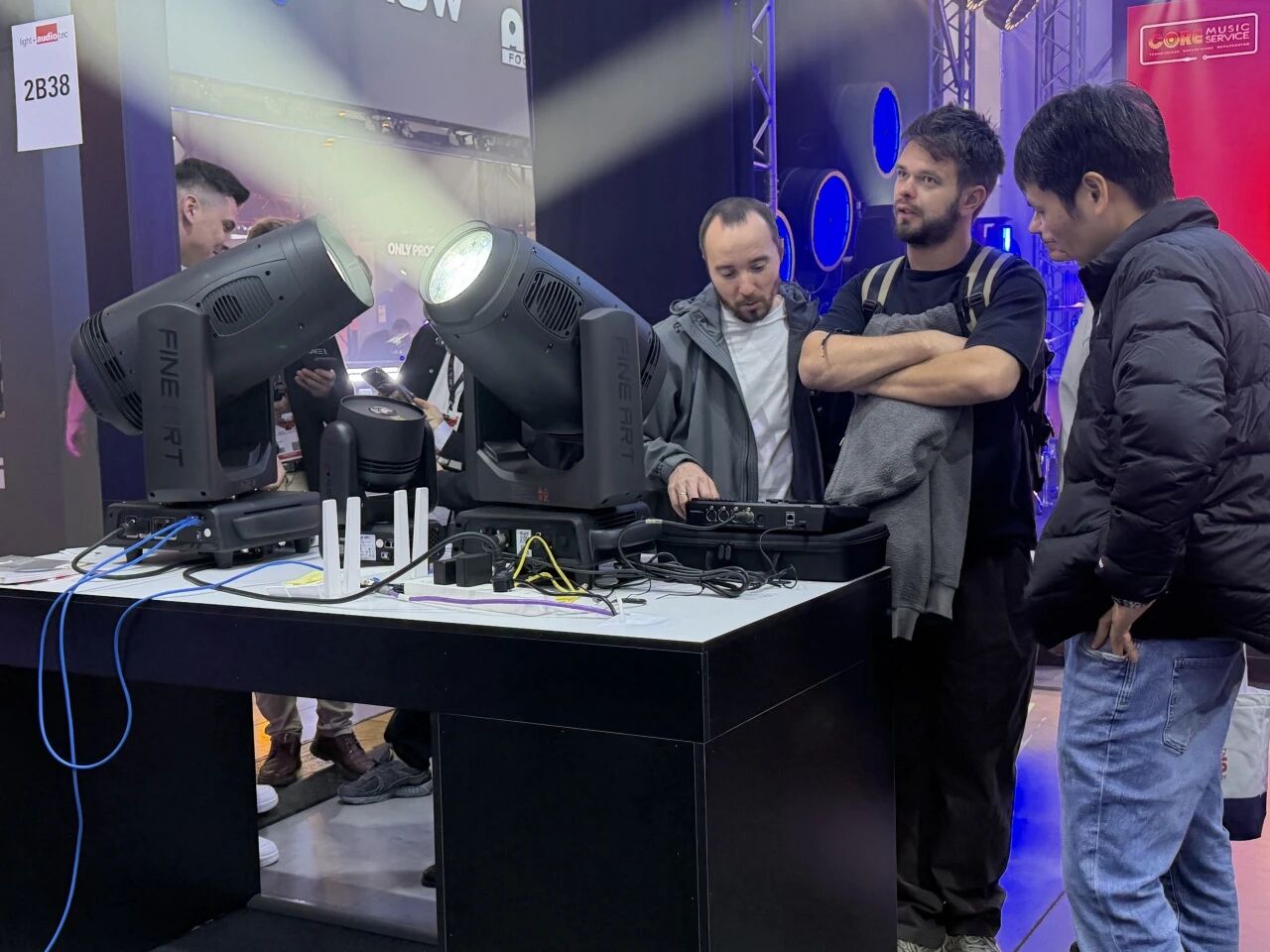
For teams comparing different fixture configurations, the FINE ART professional LED moving head light range can be used as a starting point for reviewing available moving-head options. The final selection should match the optical functions, output, and installation requirements of each zone.
4. Decide Which Zones Need Independent Lighting Control
A multi-zone event may use one central lighting control position, multiple control positions, or a combination of centralized and local control.
The best arrangement depends on the event's scale, the number of active stages, show timing, staffing, and the degree of independence required between zones.
4.1 Centralized Control
Centralized control can simplify coordination when several zones need to follow one production schedule or share visual cues.
It may also help maintain consistent programming standards and simplify supervision. However, the system must be designed to support the required number of fixtures, control channels, signal paths, and operators.
The production team should confirm whether the central control position can manage all assigned fixtures without creating unnecessary operational complexity.
4.2 Independent Zone Control
Independent control is useful when stages host different acts at the same time or require separate programming and operating teams.
Each zone should have:
Clearly defined control responsibilities.
Appropriate access to its assigned fixtures.
A documented fixture patch.
An agreed procedure for communicating changes to the wider production team.
This arrangement allows local operators to manage their own shows while reducing the risk of conflicting control actions.
4.3 Coordinated Control
Some events require both independence and coordination. A central production team may need to synchronize major transitions, while individual operators manage local cues within their own areas.
In this situation, the control plan should specify which cues are shared, which are local, and who has authority to trigger major transitions.
The goal is not necessarily to operate every fixture from one console. It is to create a control structure that matches the event's operational needs.
5. Plan Signal Distribution and Network Infrastructure
As the number of zones increases, signal distribution becomes an important part of the technical design.
Before installation, determine how lighting data will travel from control positions to fixtures and any required distribution equipment.
The plan should document:
Control locations and assigned fixtures.
DMX universes, addressing, and channel requirements where applicable.
Supported network protocols and required interface equipment.
Cable routes, distribution points, and connection locations.
Signal management for separate stages and control positions.
Backup procedures for critical control paths, where required.
Labeling standards and a documented patch list.
Do not assume that all fixtures support the same network protocols or that any lighting console can directly control every device in the same way. Verify compatibility for each model and the selected system architecture.
For large sites, cable distance, physical routing, environmental exposure, and access for troubleshooting should be reviewed before the event. Wireless control may be useful in some situations, but it requires its own planning for compatibility, radio conditions, and contingency procedures.
Clear signal documentation can reduce commissioning time and help technicians isolate problems more quickly during setup and rehearsals.
Technical teams can use the FINE ART DMX charts and fixture documentation to check available fixture control information. Confirm the correct model and DMX operating mode before preparing the final patch.
6. Calculate Power Requirements Across All Zones
Power planning should take place before the equipment list is finalized. Multiple stages and distributed lighting positions can place different demands on the event's power infrastructure.
Prepare a power schedule that records the specified power consumption of each fixture and other connected equipment. Include control systems, distribution devices, and any additional production equipment within the scope of the electrical plan.
The technical team should assess:
Total connected load and expected operating conditions.
Circuit allocation and distribution locations.
Cable lengths and installation routes.
Appropriate circuit protection and grounding.
Separation of power and signal cables where required by the installation design.
Access to power sources and safe cable management.
Applicable local electrical and event-safety requirements.
Do not calculate a system using wattage estimates that have not been checked against the actual equipment specifications. The electrical design should be completed or reviewed by qualified personnel and must comply with applicable requirements.
For events with several active stages, separate power schedules for each zone make it easier to track load allocation and identify potential constraints before installation.
7. Coordinate Lighting Looks Across Multiple Stages
When several performance areas operate within one event, the lighting should feel intentional rather than disconnected.
Visual consistency does not mean every stage must use the same colors or effects. It means the overall lighting approach should support the event's identity and schedule while allowing each performance area to serve its own purpose.
Useful coordination practices include:
Establishing a shared color palette or visual guideline where appropriate.
Standardizing naming conventions for fixtures and lighting cues.
Documenting recurring looks for introductions, transitions, and closing sequences.
Defining brightness and visual-effect expectations for different event segments.
Coordinating lighting changes with audio, video, scenic, and stage-management teams.
Reviewing sightlines to avoid unwanted interference between adjacent stages.
For events with multiple stages operating simultaneously, consider how light from one area may affect another. Bright beams, moving effects, and spill light can become distracting when stages are close together or share audience sightlines.
The lighting design should reflect the physical layout as well as the creative concept.

8. Build a Realistic Setup and Changeover Schedule
Large-scale events often operate under tight installation and rehearsal windows. Lighting plans should therefore account for the time needed to rig fixtures, connect cables, patch equipment, test control, focus lights, and resolve problems.
Create a schedule that assigns responsibilities for each stage and zone.
A practical workflow may include:
Confirming the site layout, rigging plan, and power distribution.
Installing fixtures and securing required mounting and safety hardware.
Completing power and signal connections.
Patching fixtures and checking control communication.
Testing basic movement, intensity, color, and supported effects.
Focusing and programming lighting looks.
Rehearsing transitions and coordinating cues with other production teams.
Completing a final technical inspection before the event begins.
Where several teams work simultaneously, clearly define which areas are ready for testing and which remain under installation. This helps prevent one team's work from disrupting another team's schedule.
Standardized fixture labeling, reusable documentation, and well-organized equipment packages can reduce setup complexity across recurring events.
9. Prepare for Technical Problems and Show Continuity
A large event can involve many connected systems, and a fault in one zone should not automatically create confusion across the entire production.
Develop a response plan before the event. Identify critical fixtures, control devices, signal paths, power distribution points, and the personnel responsible for troubleshooting each area.
Depending on the event's scale and risk assessment, the plan may include:
Spare fixtures or replacement components for critical equipment.
Backup copies of lighting show files and patch documentation.
Clearly labeled spare cables and approved connection accessories.
Defined escalation procedures for control or power problems.
Communication channels between lighting operators and stage management.
Pre-show checks and agreed fault-reporting procedures.
The required level of redundancy depends on the event's criticality, budget, equipment availability, and operational risk. Not every zone requires the same backup strategy.
A documented troubleshooting process helps technicians identify faults without making unplanned changes to unrelated stages or control systems.
10. Evaluate the Total Cost of the Lighting Setup
The cost of a multi-zone lighting system extends beyond the purchase price or rental rate of individual fixtures.
A complete event budget should account for equipment, transportation, rigging, installation labor, power distribution, control infrastructure, programming, rehearsal time, maintenance, and contingency provisions.
When comparing equipment packages, consider:
Whether the fixture mix covers the actual lighting requirements.
Compatibility with existing equipment and control workflows.
Setup time and the complexity of patching and programming.
Transportation, storage, and handling requirements.
Service support, repair turnaround, and spare-parts availability.
The flexibility to reuse the equipment across different event formats.
A smaller but well-planned fixture package may be more effective than a larger system with overlapping functions. However, reducing equipment should never compromise required coverage, safe installation, or the creative objectives of the production.
For production companies and rental businesses, reusable technical documentation and standardized equipment configurations can also improve efficiency across recurring events.
11. Large-Scale Event Lighting Planning Checklist
Before confirming the design and equipment list, review the following points:
Frequently Asked Questions
1. What is multi-zone event lighting?
Multi-zone event lighting is a lighting arrangement that serves several distinct performance or activity areas within the same event. Each zone may have its own fixtures, control requirements, operating schedule, and visual objectives while remaining part of the overall production plan.
2. How do you choose lighting equipment for a large-scale event?
Start with the event layout and define the requirements of each zone. Then select fixtures according to coverage, optical functions, output, control compatibility, installation conditions, and power requirements. Confirm the final design with technical documentation and appropriate site planning.
3. Should each stage have its own lighting console?
Not always. Some events benefit from independent control positions, especially when multiple stages operate at the same time. Others may use centralized control or a coordinated arrangement. The decision depends on show complexity, operator availability, control architecture, and the degree of independence required.
4. How do you coordinate lighting across multiple stages?
Use a shared site plan, consistent fixture labeling, documented cue structures, and clear communication between operators. Coordinate major transitions with audio, video, and stage-management teams, and consider spill light and audience sightlines between nearby stages.
5. What are the main challenges in large-scale event lighting planning?
Common challenges include allocating equipment efficiently, coordinating control systems, managing power and signal distribution, meeting installation deadlines, adapting to site conditions, and maintaining communication between production teams. Detailed planning and documented procedures help reduce avoidable problems.
6. How can event production companies improve lighting setup efficiency?
Standardize equipment packages where practical, prepare fixture schedules and patch lists in advance, label cables and fixtures consistently, define responsibilities by zone, and allow time for testing and rehearsal. Reusable documentation can make recurring events easier to install and operate.
Conclusion
Planning lighting for a large-scale event with multiple performance zones requires a coordinated approach to design, equipment selection, control, power distribution, installation, and show operation.
The most effective system is not necessarily the largest or most complex. It is the system that provides the right lighting functions in each zone, supports the production schedule, and can be installed, controlled, and maintained within the project's requirements.
By documenting each zone's needs and coordinating the technical infrastructure from the beginning, event production teams can improve workflow, reduce avoidable setup problems, and deliver a more consistent experience across the venue.
About FINE ART
FINE ART is a professional stage lighting brand under Guangzhou CAIYI Technology Co., Ltd. The company develops and manufactures professional lighting equipment for concerts, theaters, TV productions, and other live entertainment applications.
For large-scale event projects, production teams need to consider fixture performance, control compatibility, installation conditions, and technical support as part of the overall system design. FINE ART provides professional stage lighting products and lighting equipment solutions for different performance and event applications.
Visit the FINE ART official website to learn more about the company and its professional lighting solutions.
The final equipment list should always be based on the actual venue layout, production objectives, and verified capabilities of the selected fixtures.


