


Professional Lighting Console Guide: Core Equipment for Stage Lighting Control Systems


In modern stage production, the lighting console is the central brain of the entire lighting system. Whether it is a concert, theater performance, TV production, or cultural tourism lighting show, all lighting effects are designed, programmed, and controlled through a professional lighting console.
With the development of digital control systems, lighting consoles have evolved from simple dimming devices into advanced platforms for programming, synchronization, and network-based lighting control.
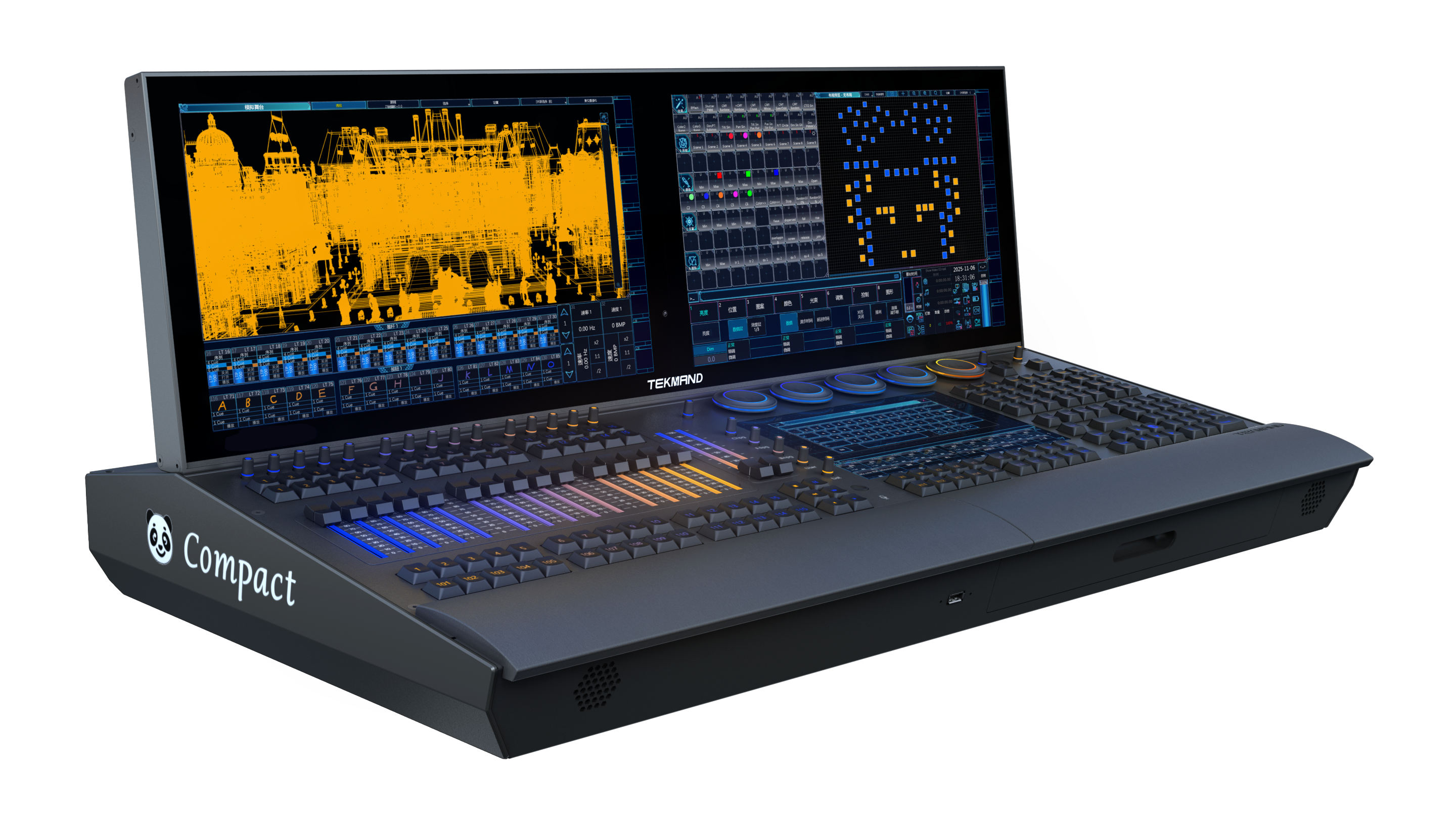
What Is a Professional Lighting Console?
A professional lighting console is a control system used to operate stage lighting fixtures via DMX512 or network protocols such as Art-Net and sACN.
Its main functions include:
• Controlling brightness, color, and movement of fixtures
• Programming lighting scenes and effects
• Synchronizing lighting with music and video
• Managing multiple fixture groups simultaneously
In simple terms, the lighting console is the command center of stage lighting systems.
Core Components of a Lighting Console System
1. Hardware Interface
A professional console typically includes:
• Faders for real-time control
• Encoders for parameter adjustment
• Touchscreen display
• Programmable buttons
These allow operators to control lighting in real time during performances.
2. Software System
Modern lighting consoles integrate powerful software features:
• Scene programming (Scenes)
• Cue list and sequence control
• 3D visualization preview
• Timecode-based automation
3. Output & Communication Interfaces
Common interfaces include:
• DMX512 output ports
• Ethernet (Art-Net / sACN)
• USB / MIDI synchronization
These ensure compatibility with modern lighting systems.
How a Lighting Console Works
The workflow of a lighting console can be summarized as follows:
• The operator creates lighting instructions
• The console converts data into DMX or network signals
• Signals are transmitted to lighting fixtures
• Fixtures execute commands in real time
For example:
• Verse: soft blue ambient lighting
• Chorus: dynamic color changes and intensity boost
• Climax: strobe + fast movement effects
All transitions are precisely controlled by the console.
Types of Lighting Consoles
1. High-End Professional Consoles
Used in large-scale concerts and tours:
• Multi-universe DMX support
• Advanced programming capabilities
• Complex timecode synchronization
Examples:
• MA Lighting systems (MA3)
• Avolites consoles
2. Mid-Range Consoles
Suitable for theaters and medium events:
• Balanced performance and usability
• Standard lighting programming features
• Faster learning curve
3. Portable Lighting Consoles
Designed for small events and mobile setups:
• Compact and lightweight
• Easy to operate
• Quick setup and deployment
Key Functions of a Lighting Console
Scene Programming
Pre-programmed lighting states for different parts of a show.
Dynamic Effects Control
Creates chases, fades, strobes, and movement effects.
Timecode Synchronization
Synchronizes lighting with music and video for precise performance timing.
Fixture Group Control
Groups multiple fixtures for efficient control.
Real-Time Manual Control
Allows live adjustments during performances.
Applications of Lighting Consoles
Professional lighting consoles are widely used in:
• Concerts and music festivals
• Theater productions
• Television studios and live broadcasts
• Cultural tourism lighting shows
• Nightclubs and entertainment venues
In these environments, lighting consoles are not just control tools—they are part of the creative production process.
Lighting Console vs DMX Controller
A DMX controller provides basic lighting control functions, while a professional lighting console offers:
• Advanced programming capabilities
• Timecode and sequence control
• Multi-universe management
• Real-time creative control
Future Trends of Lighting Consoles
The industry is evolving toward:
• Network-based control (Art-Net / sACN)
• 3D pre-visualization systems
• Automated lighting shows
• Cloud-based remote control
• More intuitive touchscreen interfaces
Lighting consoles are becoming more intelligent and software-driven.
Key Factors When Choosing a Lighting Console
When selecting a professional lighting console, consider:
• Scale of the production
• Number of DMX universes required
• Software usability
• Network compatibility
• System stability
• Expandability for future projects
FAQ – Professional Lighting Consoles
1. What is the difference between a lighting console and a DMX controller?
A DMX controller offers basic control, while a lighting console provides full programming, sequencing, and multi-fixture management.
2. How many lights can a lighting console control?
It depends on DMX universes. One universe supports 512 channels, and modern consoles can control multiple universes.
3. Do all stage shows need a professional lighting console?
Large-scale productions require professional consoles, while small events may use simplified controllers.
4. Can lighting consoles be controlled remotely?
Yes. Many modern systems support network-based or remote control options.
5. Can lighting consoles integrate with other systems?
Yes. They can synchronize with audio systems, video systems, and stage machinery.
Internal Links
• Moving Head Lights:
https://www.fineart-light.com/fine-600-bsw-ip
• DMX Lighting Systems:
https://www.fineart-light.com/tekmand-g3-pro
• Outdoor Lighting Fixtures:
https://www.fineart-light.com/fa-300-beam-ip
• Lighting Solutions Overview:
https://www.fineart-light.com/
Company Introduction
FINE ART is a professional stage lighting manufacturer specializing in LED moving head lights, outdoor waterproof lighting systems, and advanced lighting control solutions.
Our products are widely used in concerts, theaters, television studios, cultural tourism projects, and large-scale live events worldwide. We are committed to providing reliable, high-performance lighting systems compatible with global DMX and network-based control standards.


